Moxa stand or tusuk sate isi 200pcs

Bell’s Palsy adalah kelumpuhan muka dan adanya kelemahan otot yang mengontrol sebelah muka. Ini terjadi karena adanya saraf muka yang rusak, yaitu saraf Cranial Nerve VII yang mengontrol otot muka. Belll’s Palsy umumnya terjadi tiba-tiba dan mencapai puncaknya dalam waktu 48 jam.
Bell’s Palsy mencakup kondisi berikut ini :
1. Kelumpuhan sebelah muka, sulit untuk tersenyum dan menutup mata, mulut yang lumpuh miring kebawah
2. Nyeri di belakang atau didepan telinga yang lumpuh
3. Suara yang terdengar lebih keras di telinga yang lumpuh
4. Banyak air mata dan air liur di sebelah muka yang lumpuh
Dalam pengobatan TCM, Lumpuh muka (Bell’s palsy) di sebabkan oleh :
1. Kekurangan Qi dan darah di meridian yang ada di muka
2. Angin dingin (Wind Cold) yang menyerang muka
3. Reak / lembab yang menghalangi Qi dan darah untuk naik ke muka
Pengobatan Facial Paralysis dengan TCM :
1. Akupuntur : Taiyang, GB-20, GB-14, ST-2, ST-4, ST-6, ST-7, SJ-17, ST-36, LI-4
2. Scalp Acupuncture : 2/5 motor area bagian bawah
3. Moxibasi : Jarum yang diberi moxa (warming Needle) : ST-7, ST-4, ST-6, GB-20, SJ-17
4. Herbal Patent Cina : Dahuo Lodan atau Buchang Nao Xin tong
5. Bekam, beberapa kop di daerah muka

Skin Scraping Kerokan
Skin Scraping is also named Gua Sha, 刮痧
Skin Scraping is one of the traditional Chinese natural therapies. It is based on the skin theory of traditional Chinese medicine: by using tools such as jade, ox horn or cupping jars with liniment on, scraping and rubbing repeatedly the relevant parts of the skin, to dredge the channel, and activate blood circulation to dissipate blood stasis. Regular Skin Scraping is helpful to adjust the qi, relieve fatigue, and improve one's immune system.
Origins
Skin scraping tools
Skin scraping therapy has a long history and emerged in the Paleolithic Age. When getting sick or losing instinct sense, people rubbed or scrabbed certain parts of the body with hands or stones, and sometimes it really alleviated the symptoms.
Through long-term practice and experience accumulation, method of curing with stones had formed and gradually developed into a therapy. The Chinese character "痧"(sha) comes from "沙"(meaning sand), referring to a symptom. After the scraping, man's skin might show red, black and blue spots like sand, there comes the name "Gua Sha". TheSha bump should fade in 2~4 days. If this process is slower than predicted, poor blood circulation is indicated and the practitioner should ascertain whether there is a deficiency of blood, qi, yang or organ disease.
the sha bump
Principle of Skin Scraping
It's easy to understand that by scraping along meridians, positive stimulation is created. This can help the yin qi and stomach qi play their roles, dredge the stasis points and improve the circulation, so the possibility for disease dropped and immune function are enhanced.
In fact, early in the Ming Dynasty, the physician Zhang Fengkui described the theory, pathogenesis and the symptom of Sha in his Book. In his view, toxic factors enter the body through mouth, nose or pores, and damage the body. Condition became fierce as it goes deep into the body and accumulates more.
Skin scraping therapy uses tools to scrap the surface of the meridian points till the red spots emerge on the skin. This red or black and blue are considered as toxin. Through sweating, the toxins of Sha will be excreted, and the purpose of healing is achieved.
In addition to traditional scraping therapy, new therapies for losing weight, dispelling freckles and so on have appeared to meet the need of the new era. Due to the development of the modern technology, tools of scraping have become more suitable for specific part of the body and the techniques more reasonable as well. Combined with the techniques of massage, skin scraping has become the massage without direct touching, acupuncture without needle in the body, and cupping without cupping jars, as we can observe its effectiveness.
Living in a fast-tempo society, modern people face with sub-health, high pressure, this natural therapy of skin scraping is attracting more eye balls. Easy to implement with low cost and high effectiveness made it the choice of more people longing for healthy life.

Massage
Massage is also named Tui Na, 推拿
Brief introduction
Massage is a general term for pressing, rubbing and manipulating your skin, muscles, tendons and ligaments. Massage therapists typically use their hands and fingers for massage but may also use their forearms, elbows and even feet. Massage may range from light stroking to deep pressure techniques.
In a typical massage therapy session, you undress or wear loosefitting clothing. Undress only to the point that you're comfortable. You generally lie on a table and cover yourself with a sheet. You can also have a massage while sitting in a chair, fully clothed. Your massage therapist should perform an evaluation through touch to locate painful or tense areas and to determine how much pressure to apply.
If you want, your massage therapist may use oil or lotion to reduce friction on your skin. Tell your massage therapist if you might be allergic to any ingredients.
A massage session may last from 15 to 90 minutes, depending on the type of massage and how much time you have. No matter what kind of massage you choose, you should feel calm and relaxed during and after your massage. Pain that's more significant than momentary discomfort could indicate that something's wrong. If a massage therapist is pushing too hard, ask for lighter pressure. Occasionally you may have a sensitive spot in a muscle that feels like a knot. It's likely to be uncomfortable while your massage therapist works it out. But if it becomes painful, speak up.
Brush aside any thoughts that massage is only a feel-good way to indulge or pamper yourself. On the contrary, massage can be a powerful tool to help you take charge of your health and well-being, whether you have a specific health condition or are just looking for another stress reliever. You can even learn how to do self-massage or to engage in massage with a partner.
Massaging tools in Qing dynasty
History of Massage
Massage therapy dates back thousands of years. References to massage appear in writings from ancient China, Japan, India, Arabic nations, Egypt, Greece (Hippocrates defined medicine as "the art of rubbing"), and Rome.
Massage became widely used in Europe during the Renaissance. In the 1850s, two American physicians who had studied in Sweden introduced massage therapy in the United States, where it became popular and was promoted for a variety of health purposes. With scientific and technological advances in medical treatment during the 1930s and 1940s, massage fell out of favor in the United States. Interest in massage revived in the 1970s, especially among athletes.
Common types
There are many different types of massages, including these common types:
Swedish massage. This is a gentle form of massage that uses long strokes, kneading, deep circular movements, vibration and tapping to help relax and energize.
Deep-tissue massage. This massage technique uses slower, more forceful strokes to target the deeper layers of muscle and connective tissue, commonly to help with muscle damaged from injuries.
Sports massage. This is similar to Swedish massage but is geared toward people involved in sport activities to help prevent or treat injuries.
Trigger point massage. This massage focuses on trigger points, or sensitive areas of tight muscle fibers that can form in your muscles after injuries or overuse.
Benefits of massage
Massage is generally considered part of complementary and alternative medicine. It's increasingly being offered along with standard treatment for a wide range of medical conditions and situations.
While more research is needed to confirm the benefits of massage, some studies have found massage helpful for:
Stress
Managing anxiety and depression
Pain
Stiffness
Blood pressure control
Infant growth
Sports-related injuries
Boosting immunity
Cancer treatment
massage for baby
Despite the benefits for specific conditions or diseases, some people enjoy massage because it involves caring, comfort, relief and creating deep connections with their massage therapist.
However, massage isn't a replacement for regular medical care. Let your doctor know you're trying massage and be sure to follow any standard treatment plans you have.
Cautions
Vigorous massage should be avoided by people with bleeding disorders or low blood platelet counts, and by people taking blood-thinning medications such as warfarin.
Massage should not be done in any area of the body with blood clots, fractures, open or healing wounds, skin infections, or weakened bones (such as from osteoporosis or cancer), or where there has been a recent surgery.
Although massage therapy appears to be generally safe for cancer patients, they should consult their oncologist before having a massage that involves deep or intense pressure. Any direct pressure over a tumor is discouraged. Cancer patients should discuss every concern about massage therapy with their oncologist.
Pregnant women should consult their health care provider before using massage therapy.
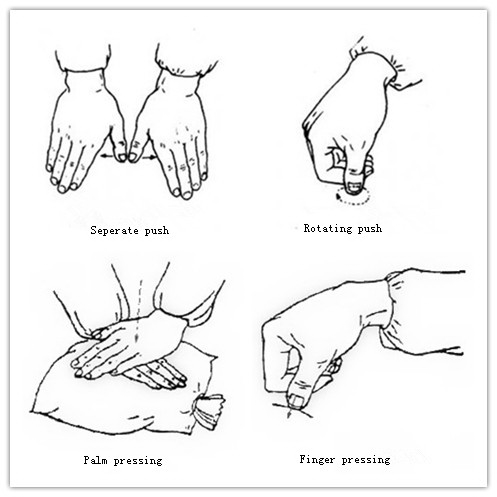
Illustrations of Tuina Manipulations
Four massage techniques
Herb Medicine
Herb Medicine is also named Chinese medicinal herb, 中草药, 中草藥
Introduction
Chinese herbal medicine is a major part of traditional Chinese medicine, which focuses on restoring a balance of energy, body and spirit to maintain health rather than treating a particular disease or medical condition. Herbs are used to restoring balance by nourishing the body.
Chinese herbal medicine is not based on western conventional concepts of medical diagnosis and treatment. Practitioners attempt to prevent and treat imbalances of body, for those having cancer or other diseases, they employ complex combinations of herbs, minerals, and plant extracts.
Chinese herbal medicine uses a variety of herbs, in different combinations, to restore balance of the body (see Astragalus, Ginkgo, Ginseng, Green Tea, and Siberian Ginseng). Herbal preparations are said to prevent and treat hormone disturbances, infections, breathing disorders, and a vast number of other ailments and diseases. Some practitioners claim herbs have the power to prevent and treat a variety of cancers. (see Astragalus, Ginkgo, Ginseng, Green Tea, Siberian Ginseng).
In China, there are over 3,200 kinds of herbs, 300 minerals and animal extracts, and over 400 formulas used. One herbal formulation may consist of 4 to 12 different ingredients, being taken in the form of teas, powders, pills, tinctures, or syrups.
Different forms of herbal medicine
In Chinese herbal remedies, there are one or two herbs that are said to have the greatest effect on the disease. The other herbs in the formula treat minor aspects of the problem, lead the formula to specific parts of the body, and help all the herbs work more efficiently.
Origins and history
Native cultures of countries all over the world have traditionally used herbs to maintain health and treat illnesses. Chinese herbal medicine developed along with Chinese culture from tribal roots. By 200 BC, traditional Chinese medicine was firmly established, and by the first century AD, a list of medicinal herbs and herbal formulations had been developed.
The classic Chinese book on medicinal herbs was written during the Ming Dynasty (1152-1578) by Li Shizhen. It contained nearly 2,000 herbs and extracts. By 1990, the latest edition of The Pharmacopoeia of the People's Republic of China listed more than 500 herbs or extracts and nearly 300 complex formulations.
The processing of Chinese herbs
As Western conventional medicine spread to the East, some traditional Chinese medical practices gradually being regarded as folklore. Since 1949, the Chinese government has supported both traditional and Western medicine use. Chinese herbal medicine became so wide-spread in the United States that in the 1970s in which year president Richard Nixon visited China. Today, practitioners with oriental medicine license from more than 30 states and more than 25 colleges practice in the United States.
Modern utilization
With the increasing popularity of herbal use, many Chinese herbs are sold exclusively and also in formulas. In the United States, Chinese herbs and herbal formulas can be purchased in health stores, some pharmacies, and from herbal medicine practitioners.
Before choosing a mixture of herbs, traditional Chinese practitioner will typically ask the patient about symptoms and do an overall examine, usually focusing on the skin, hair, tongue, eyes, pulses, and voice, in order to detect imbalances in the body.
Dimensions of herb
Herbs are classified into two major dimensions: - temperature characteristics of the herb, namely hot, warm, cold, neutral, and aromatic; - taste property of the herb, namely sour, bitter, sweet, spicy, and salty.
The various combinations of temperature and taste give the herb specific properties that can influence the yin andyang of the body. For example, sour, bitter and salty tastes are related to yin, whereas acrid, sweet are attributed to yang. There are herbs that can warm, cool, tonify, and move stagnation, etc. It is also important to understand the multi-quality of the herbs. They always combine several tastes and temperatures and may affect one even to twelve organ systems.
Warm herbs can be used for individual suffering from heat disorders. To keep the equilibrium standard of human body, corresponding herbs should be used together. Likewise, cool herbs can be used with people with cold syndromes while the overall property of the mixture is warm. Neutral herbs are those neither hot nor cold, so they are considered gentle herbs and rarely exist in the pharmacopoeia.
Chinese herb medicine
As for the tastes, sour constricts or consolidates. Herbs of sour taste are often indicated for use in protracted cough, chronic diarrhea, seminal and urinary incontinences, leakage or spermatic fluid, and other conditions related to hypo-metabolism (under-performance). In traditional Chinese medicine, they are seen as deficient or cold syndrome.
Bitter possesses the function of clearing heat, purging the bowels, lowering the qi, improving appetite and drying dampness or wetness. Bitter herbs are commonly used in fire-heat patterns, such as the acute stage of infectious disease, and the patterns of damp-heat or damp-cold, such as arthritis or leucorrhoea.
Sweet has the function of toning, improving, moistening and harmonizing many of the important systems of the body, including the digestive, respiratory, immune and endocrine systems. Sweet tastes also relieve urgency and inhibit pain due to the constrictive action of muscles. They are commonly used for treating deficiency patterns such as dry cough, and dysfunction of the gastro-intestinal tract such as spleen and stomach disharmony.
Spicy disperses, circulates qi and vitalizes blood. This group of herbs can stimulate the sweat glands to perspire, circulate qi, activate the function of meridians and organs and vitalize blood to promote blood circulation. As a whole, spicy herbs have the overall effect of activating and enhancing metabolism. Spicy herbs are commonly used in the treatment of external patterns (catching a cold), when the function of the meridian and organs is weakened and circulation of blood has been impeded. In TCM terminology, this is the stage of qi stagnation and blood cloudiness.
Salty herbs have the function of softening firm masses and fibrous adhesions. The salty taste purges and opens the bowels. Salty agents are often indicated in sores, inflammatory masses, cysts, and connective tissue proliferation.
The unique characteristic of Chinese herbal medicine is the degree to which formulation is done. In other forms of herbal medicine, especially western herbal medicine, herbs are often delivered singly or combined into very small formulas of herbs with the same function. In contrast, Chinese herbalists rarely prescribe a single herb to treat a condition. They create formulas instead. A formula usually contains at least four to twenty herbs.
Herbal formulas can be delivered in all manners of preparation. Pre-made formulas are available as pills, tablets, capsules, powders, alcohol-extracts, water-extracts, etc. Most of these formulas are very convenient as they do not necessitate patient preparation and are easily taken.
Method of preparing herbal medicine
Decoction is the traditional method of preparing herbal medicine. A decoction is a concentrated form of tea. The practitioner weighs out a day's dosage of each herb and combines them in a bag. A patient is given a bag for each day the herbal formula will be taken. The herbs are then boiled in water by the patient at home. The boiling process takes from 30-60 minutes and the resulting decoction will be consumed several times during the day.
Another modern way of delivering herbs is through granulated herbs, which are highly concentrated powdered extracts. These powders are made by first preparing the herbs as a traditional decoction. The decoction is then dehydrated to leave a powder residue. Practitioners can then mix these powders together for each patient into a custom formula. The powder is then placed in hot water to recreate the decoction. This eliminates the need to prepare the herbs at home, but still retains much of the original decoction's potency.
Acupuncture
Acupuncture is also named 针灸, 針灸
Today, acupuncture, in one form or another, is practiced in dozens of countries by thousands of acupuncturists on millions of people and their animals. According to the National Institutes of Health, in the U.S. alone, there are currently more than 10 million adults that have used acupuncture at some time in the past, or are using it currently.
People go to acupuncturists for treatment of AIDS, allergies, arthritis, asthma, Bell's palsy, bladder and kidney problems, breast enlargement, bronchitis, colds, constipation, cosmetics, depression, diarrhea, dizziness, drug addiction (cocaine, heroin), epilepsy, fatigue, fertility problems, fibromyalgia, flu, gynecologic disorders, headaches, high blood pressure, hot flushes, irritable bowel syndrome, migraines, nausea, nocturnal enuresis (bedwetting), pain, paralysis, post traumatic stress disorder, PMS, sciatica, sexual dysfunction, sinus problems, smoking, stress, stroke, tendonitis, vision problems, and just about anything else that might ail a human being.
Acupuncture Basic Theory
Acupoints
So what is it? As one of the oldest healing practices in the world, acupuncture is a family of procedures that originated in Traditional Chinese Medicine (TCM), which is based on the concept that disease results from disruption in the flow of qi and imbalance in the forces of yin and yang. As part of TCM, acupuncture aims to restore and maintain health through the stimulation of particular points on the body (called acupoints) by a variety of techniques, involving the shallow insertion of needles through the skin at acupoints along primary channels and meridians that crisscross the body.
Traditional Chinese medicine says that good health is associated with the balance of qi, an energy force that flows through the body. Qi can be hindered or helped by yin and yang--opposing forces that, when balanced, work together harmoniously. Acupuncture is intended to remove blockages in the flow of qi to keep yin and yang in balance. There are many different kinds of acupuncture, with different kinds of needles, different insertion points, different techniques, and the use of various accompaniments such as electricity or moxibustion.
Acupuncture Really Works
In China, acupuncture is used to alleviate postoperative pain. Medical experts believe that inserting needles into the body at precise points can stimulate nerves that cause the brain to release its natural pain-killing chemicals.
Experiments have proved that acupuncture can strengthen the central nervous system and especially reinforce the action of the sympathetic nervous system and cerebral cortex which control all the tissues and organs of the human body. For instance, acupuncture can regulate heartbeat, body temperature, blood pressure and respiration; relieve muscle spasm and numbness; treat disorders of exocrine and endocrine secretions; and promote secretion of the glands.
One of the key benefits of acupuncture emerging from various studies is that it has few, if any, side effects. Relatively few complications from the use of acupuncture have been reported to the Food and Drug Administration (FDA), in light of the millions of people treated each year and the number of acupuncture needles used. In the United States, acupuncture has already been considered part of complementary and alternative medicine (CAM).
Modern view on Acupuncture
The U.S. National Institute of Health has endorsed acupuncture for treating certain types of nausea, vomiting and pain, such as the nausea sort of sickness that a patient suffers when given an anesthetic for surgery, or treated with chemotherapy, or the nausea and vomiting that accompanies pregnancy, or postoperative dental pain. We have come to the very clear-cut decision that treatment under these circumstances really works.
Acupuncture
It is clear that today many people around the world believe acupuncture is an effective medical treatment for such a vast variety of disorders. This belief in acupuncture's effectiveness is based on experience and scientific experiments. However, one principal concern in evaluating acupuncture's effectiveness has been the so-called placebo effect-the possibility that beneficial outcomes derives not from the treatment itself, but from the patients' belief that it works. Medical experts have already implemented studies proving that there's physiological mechanism of acupuncture that goes beyond belief.
Acupuncture is also widely employed in easing cravings and withdrawal pain of heroin addicts. Forty percent of the drug courts in the United States use acupuncture as part of their therapy. In the Miami system alone, there are approximately four hundred treatments per day.
Some countries such as Sweden, the doctors have achieved success with acupuncture in treating the effects of stroke. Those stroke patients getting acupuncture along with physical therapy did a lot better than those getting only physical therapy.


